e-Portal
Your knowledge hub for understanding our products, services, and the technology behind crypto investing.
Understanding the Technology
Core concepts behind AI trading, arbitrage and cryptocurrency explained clearly.
How Does It Work?
Our AI system monitors real-time price feeds across multiple cryptocurrency exchanges simultaneously. When the same asset (say, Bitcoin) is listed at $68,200 on Exchange A and $68,350 on Exchange B, our AI system instantly buys on A and sells on B, locking in the $150 spread before the market equalises. This entire cycle typically completes in under a second.
Behind the scenes, machine-learning models evaluate order-book depth, historical spread patterns, network fees, and withdrawal times to determine which trades are worth executing and which are not.
Trades are executed solely on opportunities in which the expected profit substantially exceeds associated fees and slippage.
And since our AI system runs 24/7 without human intervention, it can analyze and execute thousands of opportunities per day, impossible for any human trader to capture manually. This allows investors to earn consistent weekly returns from the steady accumulation of many small, low-risk trades instead of depending on occasional high-stakes speculative bets.
What Is Artificial Intelligence?
AI enables software to analyse large datasets, identify patterns, and make decisions without human intervention. In finance, it processes market data at speeds no human can match.
AI evaluates order books, price feeds, and liquidity across dozens of exchanges simultaneously. Our platform applies these capabilities specifically to cryptocurrency arbitrage, where millisecond-level execution determines profitability.
Machine-learning models continuously improve by analysing historical trade data, adapting to changing market conditions, and optimising execution strategies in real time.
What Is Arbitrage Trading?
Buying an asset where it's cheaper and selling where it's higher. In crypto, price gaps between exchanges exist constantly due to varying liquidity, order flow, and settlement times.
Our AI system detects these discrepancies and executes both sides of the trade within milliseconds, capturing the spread as profit before the gap closes.
And because arbitrage profits from price differences rather than price direction, it generates returns in bull, bear, and sideways markets alike. This market-neutral strategy is what makes our platform resilient across all conditions.
What Is Cryptocurrency?
Digital money secured by cryptography on decentralised blockchain networks. Crypto enables peer-to-peer transfers worldwide without intermediaries, settling in minutes rather than days.
Bitcoin, Ethereum, and stablecoins like USDT have together created a global market that trades 24/7. This always-on liquidity is precisely what makes crypto ideal for automated arbitrage strategies.
Stablecoins (USDT, USDC, BUSD) are pegged to the US dollar, providing the value stability needed for deposits and withdrawals while maintaining the speed advantages of blockchain.
What Is a Decentralised Exchange?
A decentralised exchange (DEX) allows users to trade cryptocurrency directly with one another, peer-to-peer, without an intermediary holding their funds.
DEXs run on smart contracts, self-executing code deployed on a blockchain. When you trade on a DEX, your tokens go directly from your wallet to the buyer's wallet. No company ever has custody of your funds.
Popular DEXs include Uniswap (Ethereum), PancakeSwap (BNB Chain), and Jupiter (Solana). They use liquidity pools, community-funded reserves of token pairs, instead of traditional order books.
And since DEXs are open protocols, anyone with a crypto wallet can access them. There's no sign-up, no KYC, and no withdrawal limits. The trade-off is that users are fully responsible for their own security.
What Is a Centralised Exchange?
A centralised exchange (CEX) is a company that acts as a middleman for buying, selling, and trading cryptocurrency. You deposit funds into the exchange, and they hold custody on your behalf.
CEXs like Coinbase, Binance, and Kraken maintain traditional order books and match buyers with sellers. They offer familiar interfaces, customer support, and fiat on-ramps (bank transfer, card).
The trade-off: you're trusting the exchange to secure your assets. Unlike a DEX, the company controls the private keys. This means that if the exchange is hacked or becomes insolvent, your funds may be at risk.
Most CEXs require KYC (identity verification) and are subject to government regulation, which provides a layer of consumer protection not found on DEXs.
CEX vs DEX: Key Differences
| Feature | Centralised (CEX) | Decentralised (DEX) |
|---|---|---|
| Custody | Exchange holds your funds | You control your wallet |
| KYC Required | Yes: identity verification | No: wallet-based access |
| Fiat Support | Yes: bank and card deposits | No: crypto only |
| Speed | Instant (internal ledger) | Depends on blockchain |
| Security Risk | Exchange hack / insolvency | Smart contract exploit |
| Examples | Coinbase, Binance, Kraken | Uniswap, PancakeSwap, Jupiter |
Video Guides
Step-by-step tutorials to help you get started with wallets, exchanges, and crypto basics.

How to Create a DeFi Wallet
Set up a self-custody wallet like Trust Wallet or MetaMask to store and manage your crypto securely.

How to Buy Crypto on Coinbase
A complete walkthrough of purchasing your first cryptocurrency using Coinbase, from account setup to your first buy.
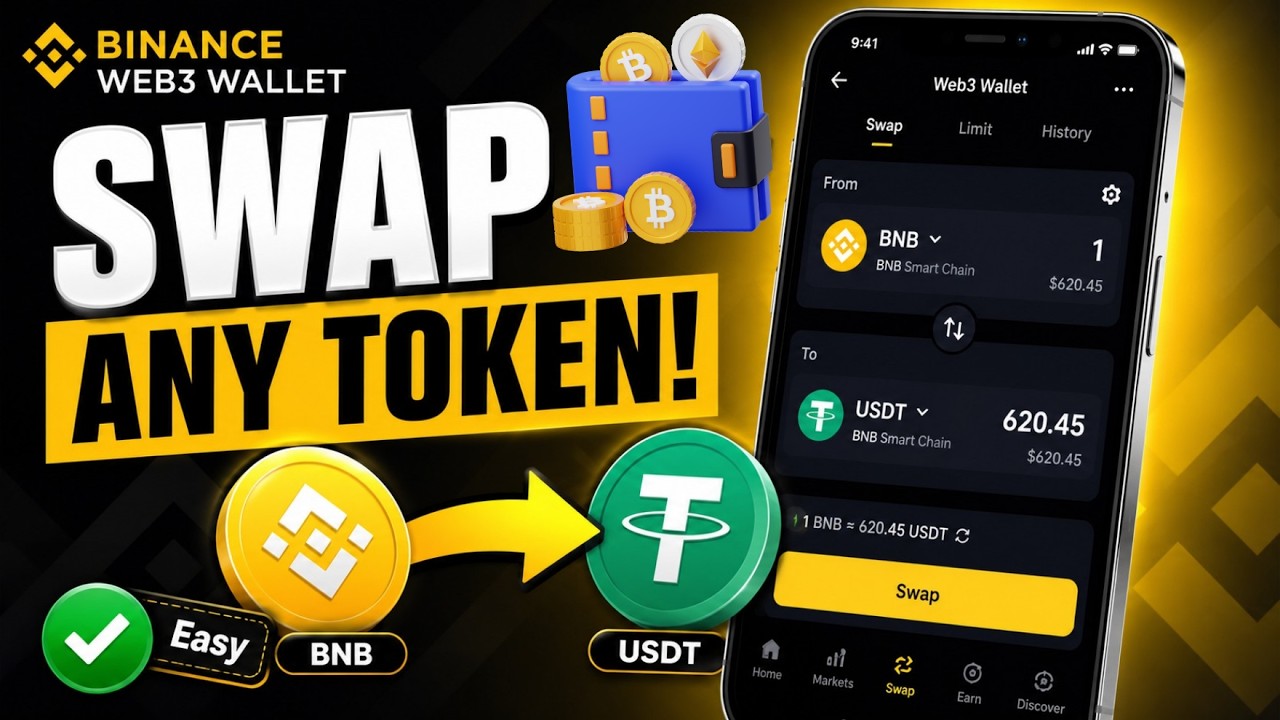
How to Swap Coins
Learn how to swap one cryptocurrency for another using a decentralised exchange or wallet's built-in swap feature.
Northern Trust Digital Platform Guides
Step-by-step instructions for using our platform. From your first sign-up to withdrawing your profits.
How to Create an Account
Register, verify your email, and complete your profile setup in under two minutes.
View in FAQHow to Fund Your Account
Deposit cryptocurrency from your wallet; select your coin, copy the address, and send your funds.
View in FAQHow to Withdraw Funds
Withdraw profits, capital, or referral earnings; select from the options, enter the amount, and submit.
View in FAQ